ERO FROM THE OTHER WORLD
Choreographer: Branko Markovic
Compositor: Jakov Gotovac
Geographical origin: Bosnia and Herzegovina, Croatia
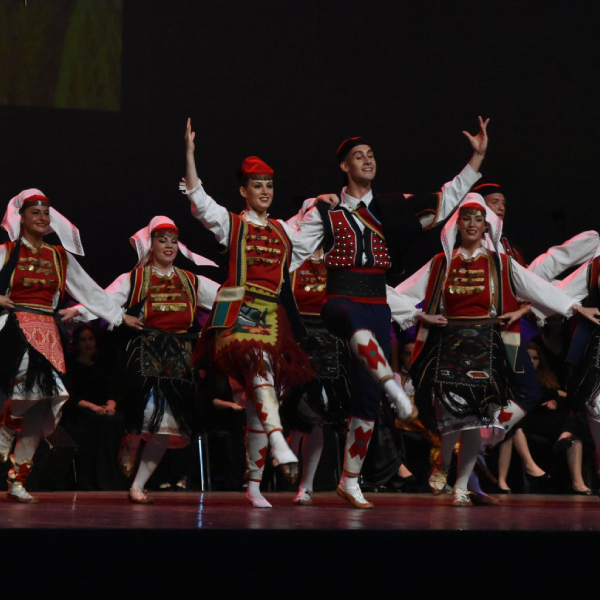
Choreography itself is based on the music from the final act of the opera "Ero from the other world" by Jakov Gotovac. Following the national tale, the libretto was sung by Milan Begović. The story takes place in a small town, somewhere in Herzegovina, in early autumn, during the period of Turkish impery, „in today's time as it was a hundred years ago". The choreography is characterized by a combined dance of male and female dancers, who, both with their appearance and attitude, and with their firm steps, evoke the character of the people of Dalmatian Zagora. The choreography is accompanied by a certain lyric text which is presented in form of song during coreography. On the stage you can always see 8-10 dancing pairs, and after the introduction part, the solo pair is joining with their elegant dance, which are emphasizing the elements of balet in coreography.

BANAT MOTIVES
Choreographer: Branko Markovic
Geographical origin: Serbia, northern part
Choreography Banat motives, is introducing one wedding that takes place in north Serbia, together with all customs and traditions that are specific for this area. The choreography itself is divided into several acts. The first act refers to the entry and introduction of the actors who are present at the wedding, including young gentlemen, grandmothers, bagpipers, young girls and, of course, the bride and groom. The second act represents the beautiful dance of the bride and groom. The third act represented the arrival at the wedding itself, where all the customs are emphasized. Finally, the last act represents the wedding itself, which is characterizied by a energetic and joyful dance. Through whole coreography, you can hear different songs that are characteristic for this part of Serbia.
BUGARKA
Choreographer: Vladimir Spasojevic
Geographical origin: Serbia, southeastern part
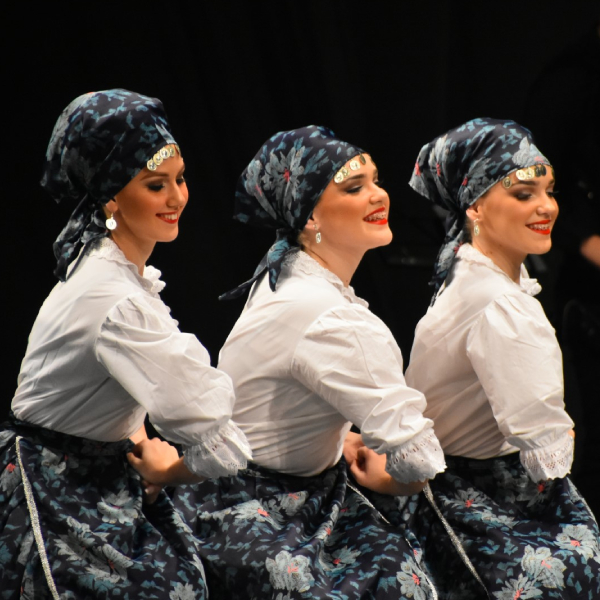
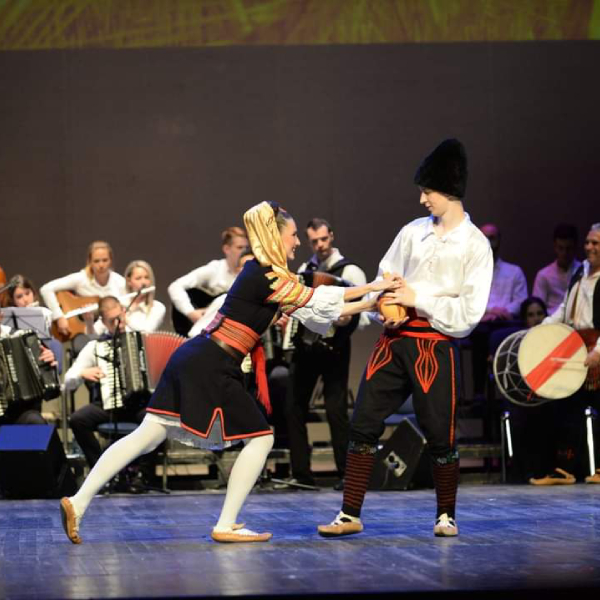
The choreography is characteristic by its eccentric and demanding steps, which are additionaly emphasized with the extraordinary and fast tempo of the choreography. Each step harmoniously fits into the choreography, and it is characterized by male-female competition, so that both sides show their skills, including the solo pair that provides the introdustion into coreography. Historically speaking, dances from southeastern Serbia are closely related to the Bulgarian population and tradition, so that culture is strongly influencing the entire choreography and the tempo itself. The physical abilities of dancers, shown in this coreography, will left you speachless.
CRMNICKI ORO
Choreographer: Branko Markovic
Compositor: Borislav Tamindzic
Geographical origin: Montenegro
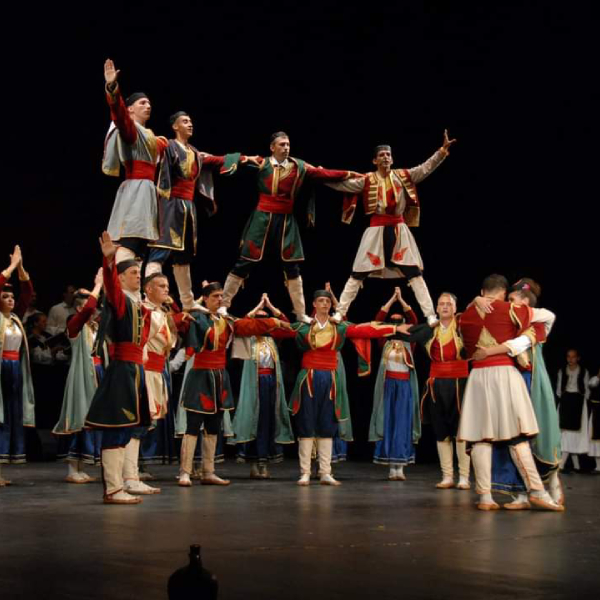
Crmnicki oro is one of the most famous choreographies from the area of Montenegro. Since ancient times, it has taken an important place in the folklore and cultural tradition of the Western Balkan. Oro was danced both in rural areas, as well as in urban ones. With vocal and instrumental accompaniment, the choreography shows the confident and strong appearance of the people from Montenegro. The attitude of the players clearly shows seriousness, while the coordinated steps evoke the firm attitude of the domestic habitants. The choreography can include the solo part of the fiddle, while the very end of the choreography is characterized by the depiction of a group of men standing in a circle, while another group of men climbs on their shoulders and makes another circle. This is the most recognizable scene, also known as „kolo na kolo“.
DANCE FROM MACVA
Choreographer: Dragoslav Vukovic - Kljaca
Geographical origin: Serbia, northwestern part
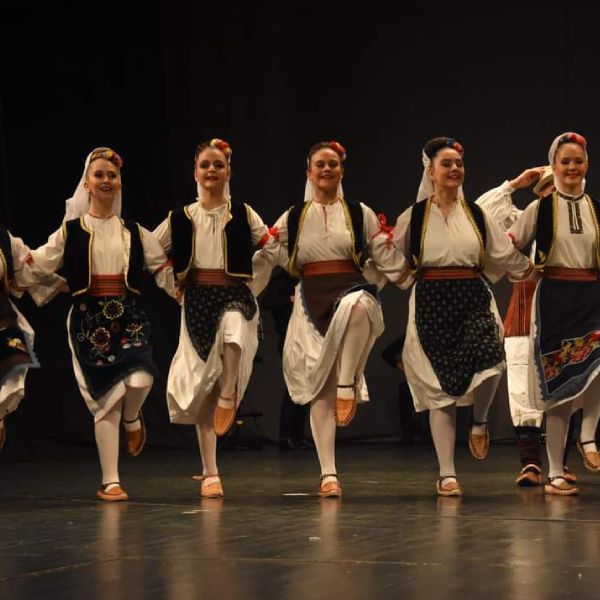
Somewhere between Banat and Srem, the dance characteristic to Macva, shows a range of tempo, starting from slower and going to much faster. The choreography is characterized by a song that is part of almost the entire performance. Competing boys and girls with song and dance makes the choreography harmonic and cheerful. Choreography is a funny character and her beauty is in the acting rather than technical skills of dancers.
DANCE FROM NISAVA
Choreographer: Milan Bosiljcic Beli
Geographical origin: Serbia, southeastern part
A fast and eccentric game is characteristic of the southeast region. The mutual dance of male and female dancers, along with the combination of steps characteristic for this region evoke the character of the Serbs from this part. During the entire choreography, the tempo gradually increases, so that at the end we have an interesting and fast finale.
DANCE FROM SREM
Choreographer: Branko Markovic
Geographical origin: Serbia, northern part
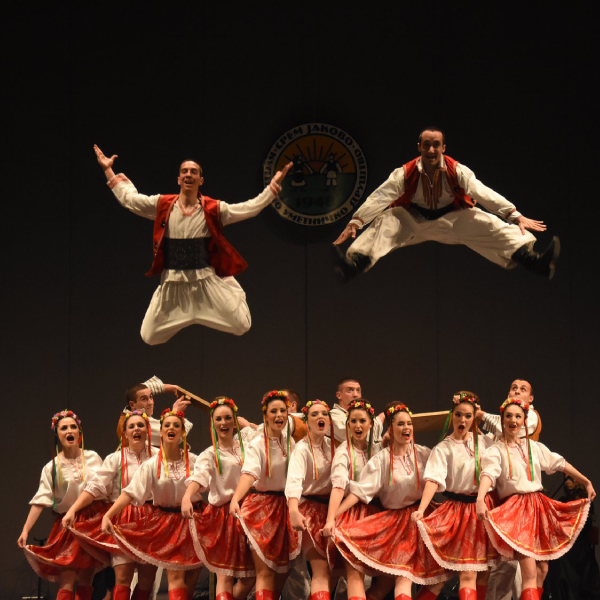
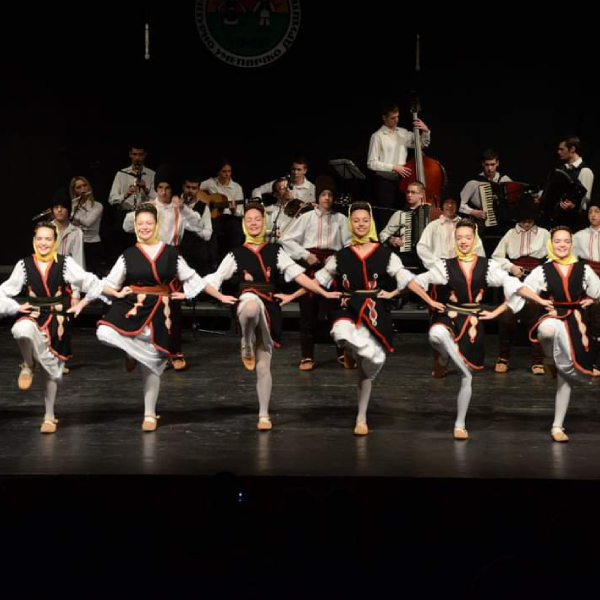
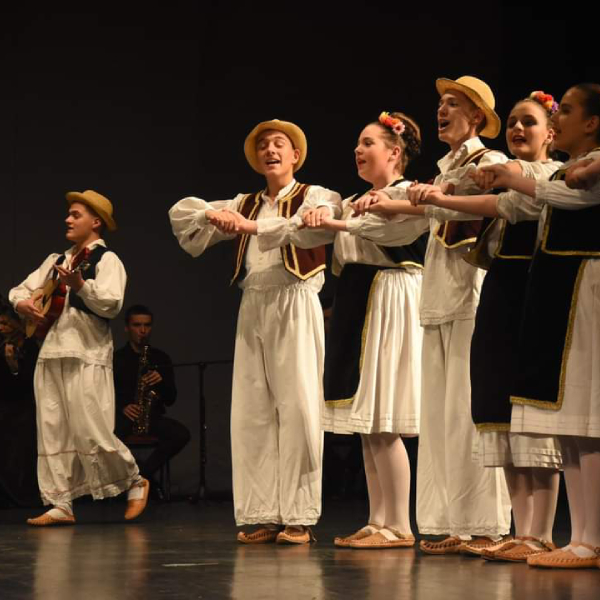
Srem is one of our most characteristic choreographies for our group. It is meant to be performed by a larger group of people, and the choreography is divided into several parts. It is a characteristic dance of solo dancers who appear after the first, introduction part. During the entire choreography, the song „Divan je kiceni Srem“ is performed, which complements and explains the dance. The choreography is divided into several segments, consisting of both boys and girls dancing with each other, while singing cheerful and dashing songs.
VLASKO
Choreographer: Branko Markovic
Geographical origin: Serbia, eastern part
In addition to the characteristic costume, the fast and temperamental game, in the combination of male and female parts, clearly depicts the character of the dance itself. The choreography itself represents a warlike tempo, from the entrance of the girls, which is a part of a slower character, through the entrance of the men and the pair dance where the tempo reaches the culmination. The demanding steps and the choreography itself transmit incredible energy to the entire audience.
OLD SERBIA
Georgraphic origin: Raska, Kosovo and Metohija, Vardar Macedonia
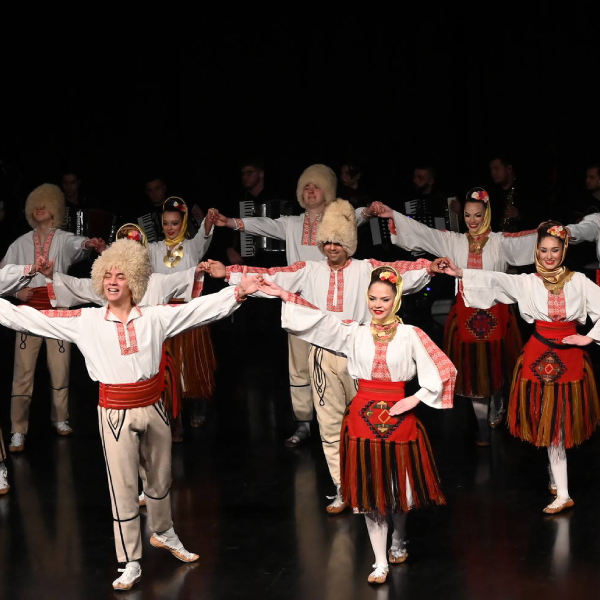
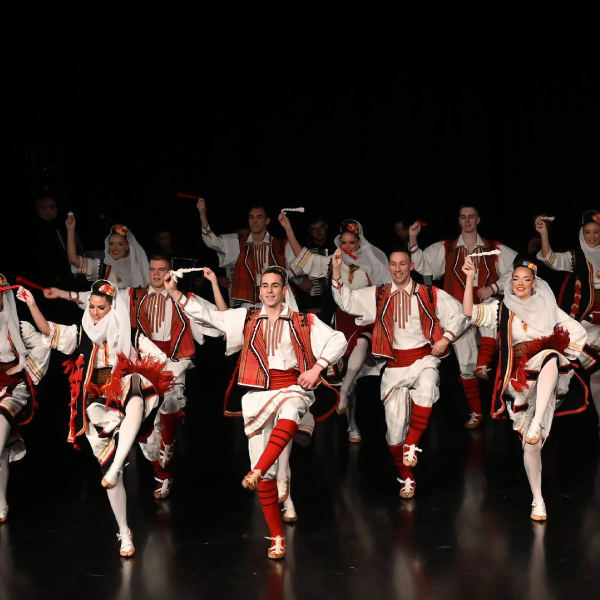
This choreography is characterized by dance and song that is part of the tradition of Raska, Kosovo, Metohija and Vardar Macedonia.This part of Serbia is known as Old Serbia, because it implicates on old territory that was heart of our country in middle century- during Nemanjic dynasty. Choreography starts with slower and elegant dance of female dancers, after which male part of the ensemble is joining on the stage, showing technically extremely hard moves and pirouettes. Costumes are really elegant, and the main part of the female costume is white long veil and long vest -kaftan.
TIMOK
Choreographer: Dobrivoje Putnik
Geographical origin: Serbia, eastern part
One of the important characteristics of the choreography itself is the role of the hajduk Veljko Petrovic and his very appearance, which is determined by the historical period itself. The choreography is divided into several segments. The first part of the choreography is characterized by the entrance and dance of girls and grandmothers, after which the boys enter together with Hajduk Veljko. The second part is followed by a mixed game of both males and female dance parts. In the third part of the choreography, the entrance of the grandfather and the joint dance with the grandmothers is emphasized. This is followed by the grand finale in which all the players play and the tempo reaches its peak from the beginning to the end of the choreography.
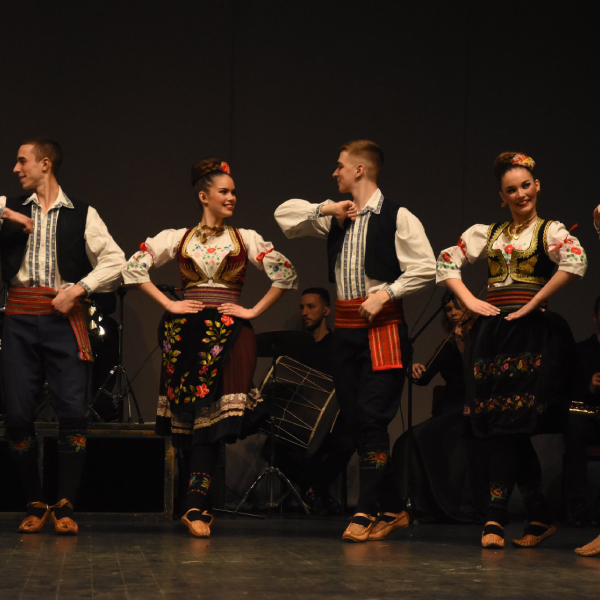
DANCE FROM SUMADIJA
Choreographer: Branko Markovic
Geographical origin: Central Serbia
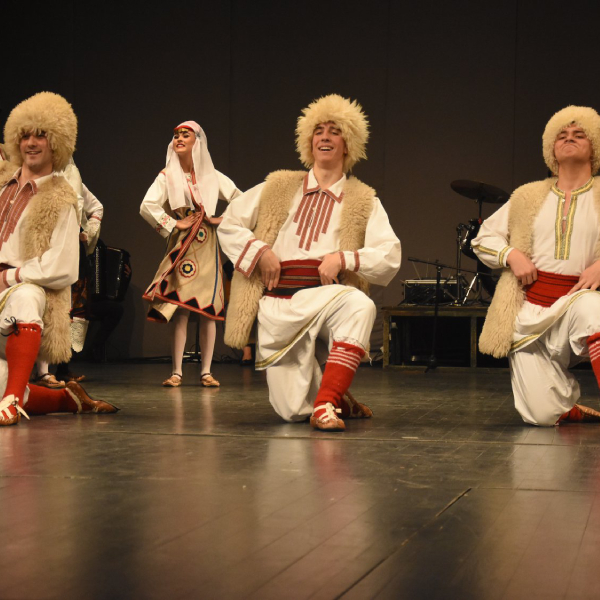
Cheerful games that express joy and togetherness in outplaying girls boys and girls with tiny steps and typical floral costumes. The game is named after the central part of Serbia called Šumadija. It is followed with competition between male and female part of ensemble in song, which is emphasized with act.
LINDJO
Choreographe: Branko Markovic
Geographical origin: southern Dalmatia, Herzegovina
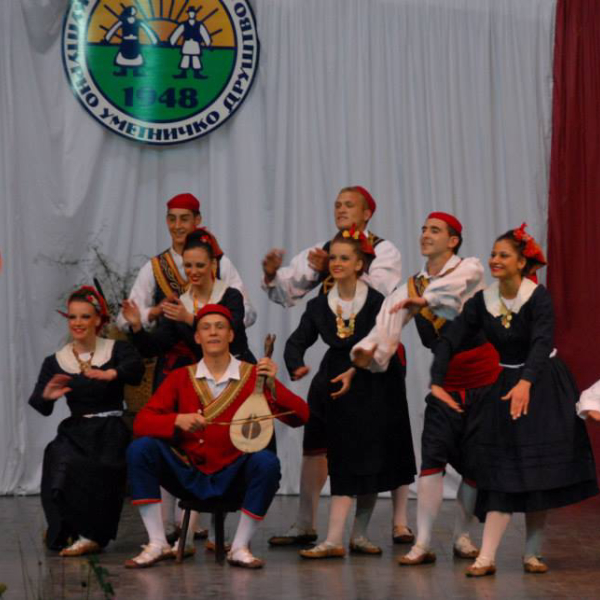
‘Poskocica’ from old Herzegovina and the surroundings of the ancient city of Dubrovnik. The leader of the game, the shouter, gives humorous commands for various game combinations accompanied by music. The costumes and music reflect the Mediterranean mentality of this population, which is characterized by cheerfulness and joy of living.
VRANJAN SUITE
Choreographer: Branko Markovic
Geographical origin: southern Serbia
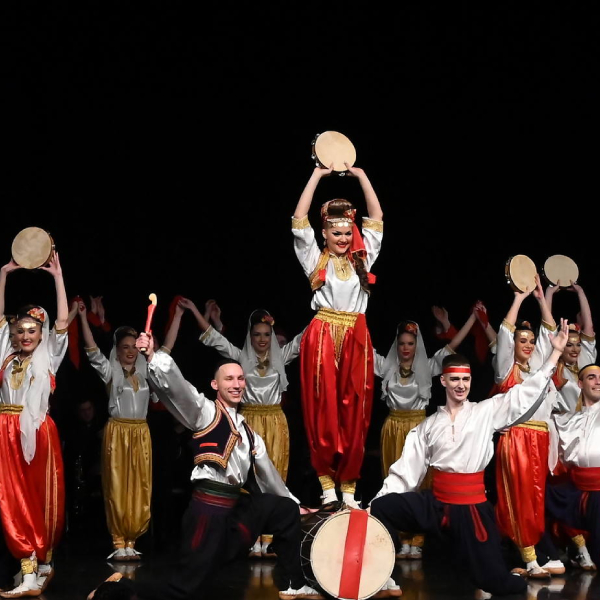
This spectacular choreography consists of three parts that seamlessly flow into each other, forming a solid, attractive and effective unity:
1. Vranjanka - female dance
2. Teskoto - male dance
3. Cocek (Gypsies) – the couple dance
Svita (choreography) was named after a small town in the south of Serbia, Vranje, where there is a strong influence of the Orient. Some elements are based on the popular Serbian drama ,Kostana”. That heated temperament of the south is enriched by strong and gradating musical-scenic contrasts and moods, various choreographic solutions and colorful costumes with the inevitable dairas and drums.
GYPSY LOVE DANCE
Choreographer: Dobrivoje Putnik
Music: Stanojlo Rajicic
Geographical origin: Northern Serbia, Vojvodina
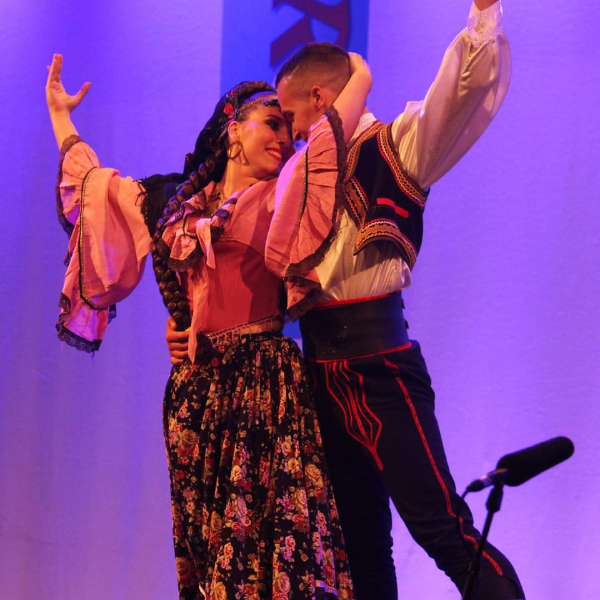
Choreography that shows the love and passion of the Gipsy through the playful ecstasy of the loving couple. It comes from a small Roma community from Vojvodina. The choreography is made for one couple of solo dancers that are telling to the audience their love story through dance and emphasized acting.
GLAMOCH
Choreographer: Milivoje Djurovic
Geographical origin: Western Bosnia
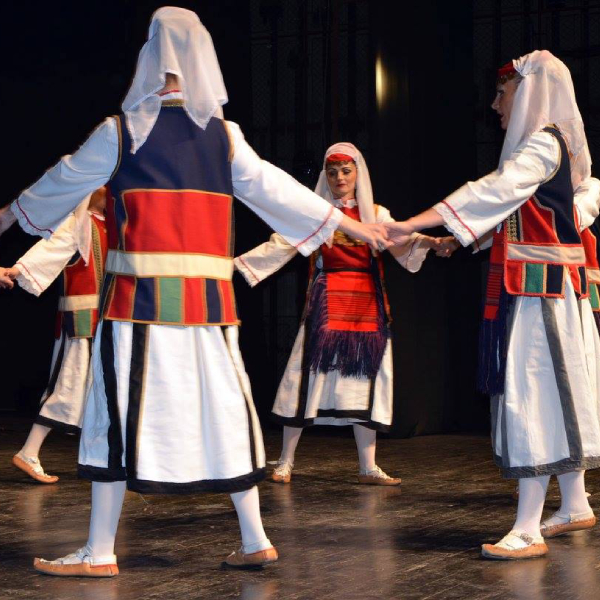
This unusual game without musical accompaniment originates from the mountain town of Glamoč in western Bosnia. The basic pulse and diverse rhythmic-sound effects are obtained by the strong pounding of steps and the clinking of jewelry on women's costumes. It is a dance of testing strength and health, a test for a girl who dances the same kolo with a man and proves that she is healthy and ready for marriage. The choreography was made on the basis of ethnological studies and the author's original research.
FEMALE MACEDONIA
Choreographer: Branko Markovic
Music: Alfred Pordes
Geographical origin: Macedonia
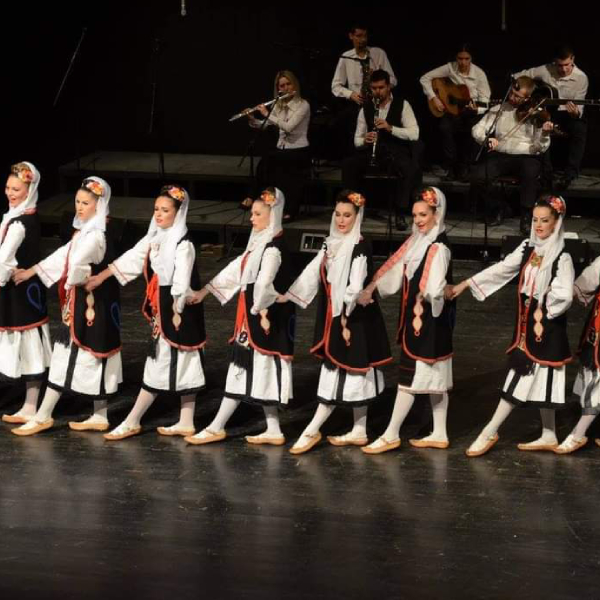
The choreography consists of an exclusively female part of the dance that portrays everyday life, togetherness, happiness, but also sadness due to 'pechalba', as well as the strong temperament of the population of the folklore-rich area of Macedonia.
BUNJEVKE
Choreographer: Branko Markovic
Geographical origin: Serbia, northern part
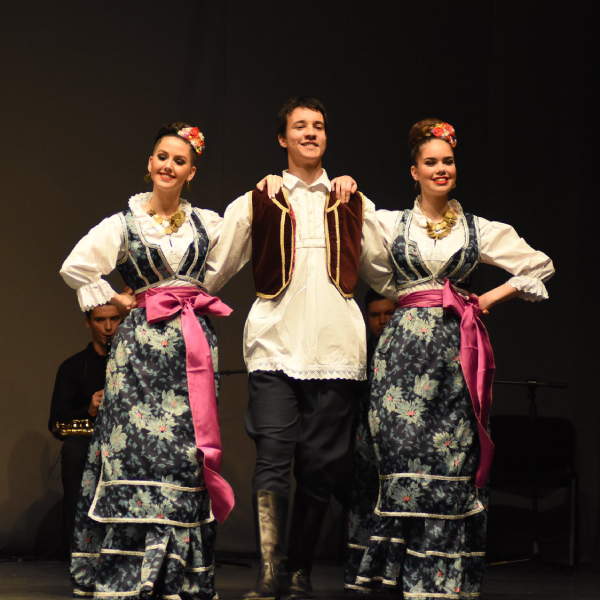
The choreography shows the town dance of the Bunje people, a people from the area of northern Serbia, more precisely Vojvodina. With a very elegant and colorful costume, it is characterized by a variety of steps, over light and feminine steps performed by girls, to a fast part performed by men. The choreography features a pair of soloists, consisting of two girls and a guy who introduce us to the choreography itself. The characteristic actors of the choreography are the boys who make up the "fast trio", who will delight you with their speed and dancing skills.
IGRE IZ VOJVODINE
Choreographer: Dragoslav Dzadzevic
Geographical origi: northern Serbia
This choreography expresses a special style of dancing in Vojvodina, but also contains cultural elements of Russian and Ukrainian dance. Male dancers have a more dominant role. During dancing, they improvise, vary the basic, mostly simple dance steps. The skill is reflected in the continuous movement of the legs from the knees down. Women dance mostly calmer, rather following and adapting to partners. The whole choreography is accompanied by clapping and couple games.